The Reality Behind WA’s Workforce Pressure
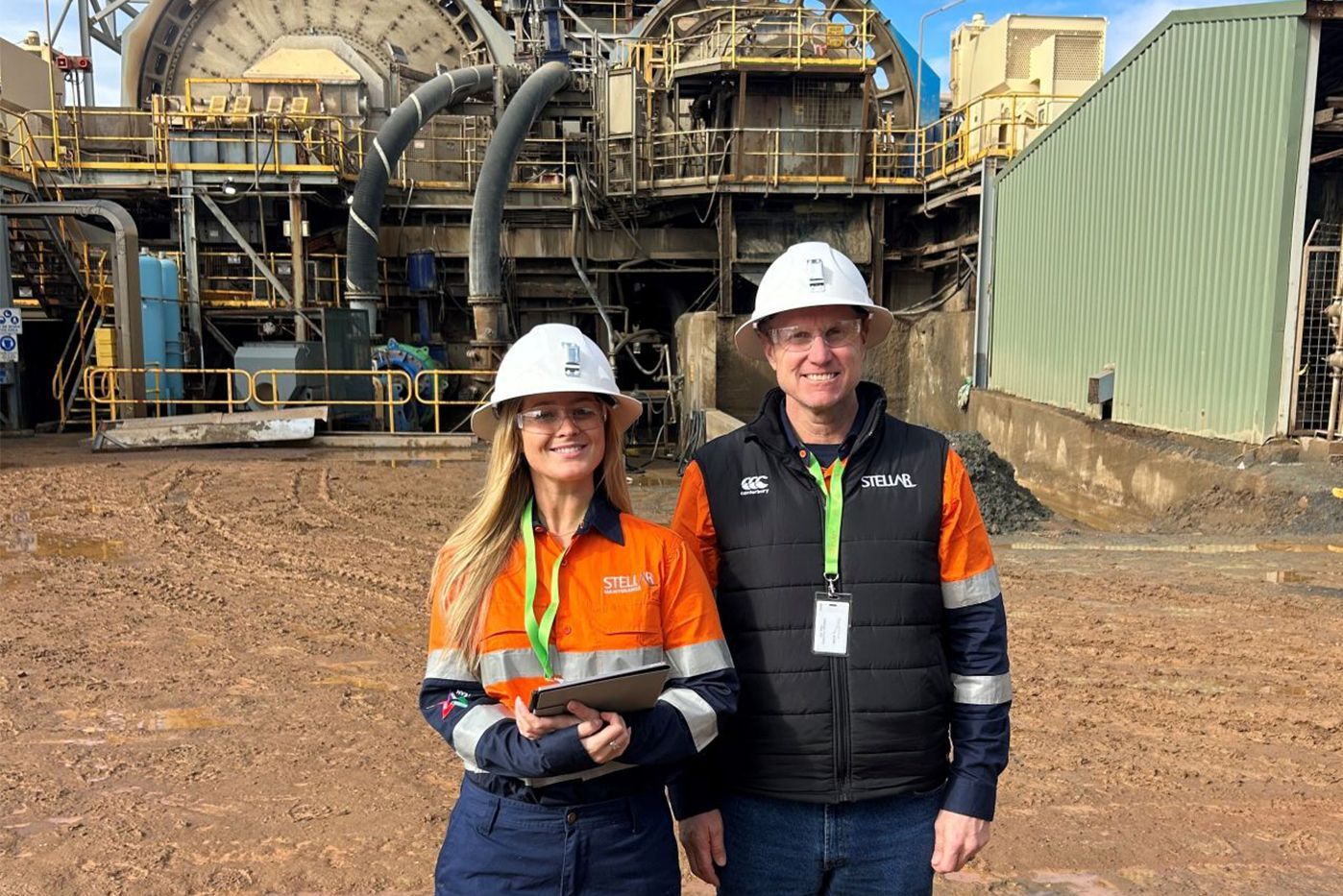
Insights from Hayden Gladish, General Manager – Stellar Maintenance
Western Australia continues to attract talent at scale. On the surface, the story is familiar – strong wages, major projects, and long-term opportunity. But beneath that, there is a more complex reality shaping how maintenance teams operate, how businesses perform, and how sustainable the workforce model really is.
We sat down with Hayden Gladish, General Manager of Stellar Maintenance, to unpack what he is seeing across the market.
With over two decades in mining and maintenance, his view is clear, direct, and grounded in experience.
“The issue isn’t just shortage. It’s capability.”
Since stepping into the General Manager role over 12 months ago, Hayden has gained a broader view of the system, and his first observation cuts straight to the core.
“The biggest thing I’ve seen is the level of skill dilution across the state,” he says. “There’s a labour shortage, but more importantly, there’s a capability issue underneath it.”
That pressure is now flowing directly into business performance.
“It’s restricting organisations from growing because of the cost to do business. And that’s not just mining or maintenance, it’s across the board.”
He explains that rising labour costs are not simply a result of demand, but how that demand is playing out in the market.
“As with any resource, scarcity drives value. In this case, it’s skilled labour.”
“But what’s happening is companies are offering uplifts well above CPI, and people are moving for higher pay, not because their capability has increased.”
That movement is creating a cycle. “One company pays more, people move. The next company pays more again. But the skill set doesn’t necessarily follow.”
“You end up with people moving into roles they’re not fully equipped for, and over time that dilutes the overall capability of the workforce.”
It’s a pattern he sees as unsustainable. “It’s a continual cycle, and it’s not healthy long term, not just for the industry, but for the economy.”
“About 5% of WA’s population is in mining, around 150,000 people. Those people aren’t building houses, working in healthcare, or teaching the next generation. That has a broader impact.”
Opportunity is still there, but it rewards action
Despite the structural challenges, Hayden is clear on why people continue to move west. “Opportunity. It’s as simple as that.”
But he is equally clear that not everyone is prepared to take it.
“I get asked all the time how to get into mining. My answer is always the same, move to Kalgoorlie.”
He uses that response as a filter. “The reaction tells you everything about how serious someone is. Someone can leave Sydney on a Sunday, be in Kalgoorlie by midweek, and be earning strong money within days. They can accelerate their career quickly, but only if they’re prepared to commit.”
At the core of it is personal accountability.
“Anyone can make something of themselves if they have the right internal driver. That ‘why’ matters.”
Where maintenance teams are really feeling it
On site, the impact of these workforce dynamics shows up quickly. Hayden points to three consistent pressure points
1. Loss of mechanical fundamentals
“There’s a lack of mechanical aptitude and first-principles thinking,” he explains.
“No matter how good your maintenance plan is, no matter how advanced your CMMS is, if the person executing the task doesn’t understand what’s acceptable, that becomes your weakest link.”
“You can’t systemise your way out of poor understanding at the execution level.”
2. Accountability has shifted
Hayden is candid about the cultural shift he has seen over time. “There used to be more accountability on site. The old carton rule, mateship, people keeping each other honest.”
“You’d get pulled up if something wasn’t right, and then you’d sit down after shift and talk through what was learnt.”
“There wasn’t as much reliance on supervision because everyone was holding the line.”
That dynamic has changed. “With a more transitional workforce, people are moving more often. That reduces ownership, whether it’s quality control or following process.”
3. Training is being undervalued
“There’s a reluctance from individuals to invest in training,” he says. “But organisations also need to be clearer on where their strengths and weaknesses actually are.”
“Understand the weakness, then upskill the weakness.”
The upside is direct. “A higher-skilled workforce improves tool time efficiency, reduces cost, and ultimately means you get better outcomes with fewer people.”
The real operational impact
For Hayden, the impact of skill shortages goes well beyond hiring. “There’s still a level of immaturity in how maintenance is understood as a system.”
And it’s not just at trade level. “Skill shortages extend into leadership. The best trades don’t always make the best leaders, but that’s often how progression happens.”
That creates a gap in how maintenance is managed. “Leaders need to understand systems and end-to-end processes, not just how to diagnose a single issue.”
Measurement is another challenge. “To properly understand downtime, safety, and cost, you need a strong Time Utilisation Model (TUM).”
“That means measuring rework, poor workmanship, delays, operational damage, properly and with integrity.”
He acknowledges why that doesn’t always happen. “Those metrics expose weaknesses, and not everyone is comfortable putting that on the table.”
But for Hayden, that’s exactly the point. “If you don’t measure it, you can’t fix it. Personally, I like to see where we can improve & improve.”
Different strategies, different outcomes
Across the market, Hayden is seeing a wide range of approaches to workforce strategy, largely driven by business model, cost pressure, and project timelines.
Some organisations are taking a long-term, commercially driven view.
“Commodity-driven businesses tend to think longer term. They focus on reducing all-in sustaining cost (AISC) to stay competitive and protect shareholder value.”
That’s driving a shift towards international workforce strategies.
“There’s a strong demand for international talent because it increases tool time efficiency per hour worked. The cost savings can then be reinvested back into developing the workforce.”
Others are taking a more immediate approach.
“Some organisations are paying above market rates to drive short-term output, hoping the productivity gain offsets the cost. In some cases, that’s supported by a more transitional workforce over time, which creates a more unpredictable cost base.”
He also points to more structured, project-specific models.
“We’ve worked with clients on fixed-duration projects, for example three-year programmes, where they don’t want the risk of carrying a workforce beyond that window.”
“In those cases, we scope the workforce as a hedged cost. It removes guesswork for board approval and operates similarly to contract mining, just focused on people.”
Alongside these approaches, there is growing investment in workforce development.
“Apprenticeship pathways, upskilling programmes, and ex-ADF initiatives are all positive steps. The key is maintaining balance so you don’t dilute capability or culture.”
Across all models, one principle remains constant.
“To be successful, organisations need a collaborative approach. Your people teams need to understand attrition, production demand, and build a pipeline accordingly.”
“You should be planning at least 18 months ahead using today’s data.”
System-level performance starts earlier than you think
When asked where the biggest opportunity sits, Hayden doesn’t hesitate. “Clean up your CMMS. And use it properly.”
But for him, that’s only part of the picture. “This doesn’t start with a maintenance plan. It starts at procurement.”
“Control the source of what’s coming into the business. That allows you to lock in quality, leverage bulk buying, and remove opinion at execution level.”
From there, performance becomes data-driven. “Analyse the data for continuous improvement. And importantly, don’t just focus on what’s going wrong.”
“If certain areas aren’t causing issues, stretch them. Free up tool time and reallocate it where it adds more value.”
Real solutions require commercial discipline
Hayden is clear that many organisations are still applying short-term fixes to structural problems. “Sometimes you need to stop and sharpen the axe,” he says.
“Step back and ask, what is actually best for the business?”
That starts with fundamentals. “What is the labour budget? What is the actual labour cost? And how do you achieve that budget?”
From there, workforce strategy becomes a lever, not just a cost. “Embedding your own workforce isn’t just about limiting cash bleed. There’s unquantified upside.”
“You reduce admin across mobilisation, demobilisation, purchase orders, invoicing. All of that creates inefficiencies, and often drives skill dilution in support functions.”
It also changes behaviour on the ground. “You build a customised team with ownership and pride.”
“And in many cases, saving $100k over two years on a single labour head comes down to having the courage to challenge the status quo.”
Workforce strategy is not role filling
For Hayden, the difference between recruitment and true workforce strategy is simple. “It’s like a sports team. You need the right players in the right positions.”
“If you’re not putting the best team forward, you’re setting the team, yourself & the business up to fail.”
The approach is continuous. “Understand the weakness then plug the gap, look for the next weakness, plug the gap – keep raising the average of the skill set. “
Over time, that lifts overall capability. “If it works, you win. If it doesn’t, you still win, because you learn and improve.”
Built on experience, not theory
What differentiates Stellar Maintenance, in Hayden’s view, comes down to one thing – experience-backed judgement.
“I know what to look for because I’ve lived it.”
“I grew up watching Emu Export adverts of miners breaking a sweat in the Pilbara red dirt, stubbie shorts, four weeks on, one week off. Then over 23 years in the industry, I’ve seen the good, the bad, and the ugly, worked with great mentors, seen mine closures, and learnt a lot from people around me.”
For Hayden, that exposure shapes how he approaches the role today.
“There’s no point reinventing the wheel when you can learn from experience that’s already been earned.”
“Without giving away too many secrets, it comes down to due diligence, both in-country and internationally. It’s about doing what other people can’t be bothered doing.”
“Know what the client wants, and give them exactly that, not what you think they want.”
His track record reflects that approach.
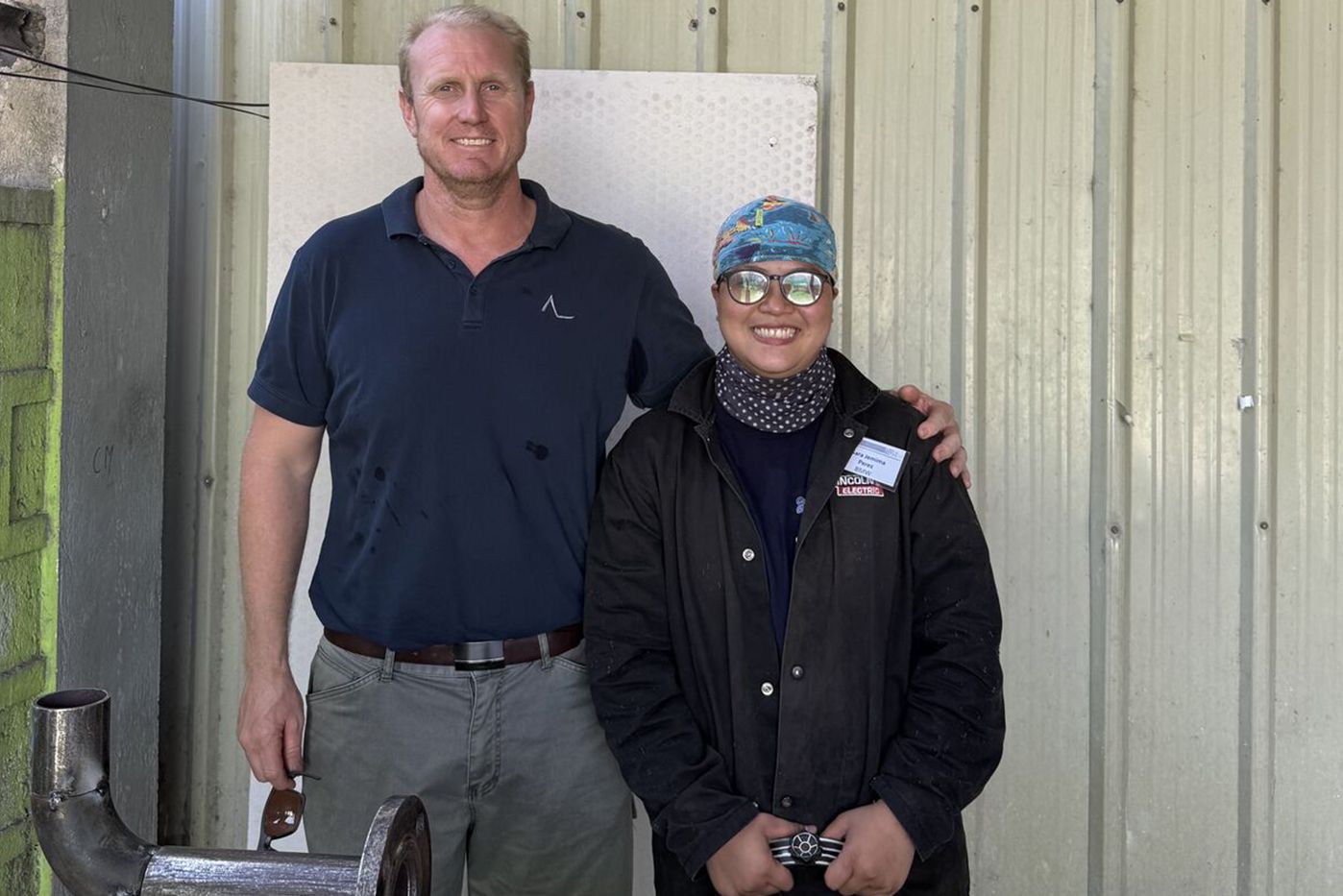
“Over the past five years, I’ve been involved in seven international campaigns across both the northern and southern hemispheres, bringing in just over 140 trades from nine different countries. Only one hasn’t worked out in Australia. Technically, he was one of the best, but his comprehension just wasn’t where it needed to be.”
“I’ve learnt from that experience, and that’s the point. No matter what, you keep refining and improving.”
What strong partnerships actually look like
For Hayden, high-performing partnerships are straightforward in principle, but not always in practice. “Collaboration. Transparency. Trust.”
There is also a shared responsibility. “We don’t want to waste anyone’s time, and that has to go both ways.”
In a constrained labour market, alignment becomes critical. “Labour skills shortage is systemic – we need to be united to achieve the right results.”
Straight advice for the market
Hayden’s advice is simple and direct.
For candidates, “Walk the walk if you talk the talk, back it up. Don’t be entitled. Earn your stripes. Never stop learning. Become a subject matter expert. Be the “go to” person people rely on to solve problems.”
For operations leaders, “Pick up the phone. Have the conversation, even if it’s just a vent.”
He’s also realistic about the environments many leaders are operating in. “Some organisations are constrained by internal red tape. That’s where we can flex while still working within the guidelines.”
And ultimately, it comes down to influence, “Make the case compelling” he says.
Looking forward: planning is the differentiator
When it comes to future workforce demand, Hayden brings it back to fundamentals.
“Understand the life of your project. Factor in labour demand, fleet hours, attrition, and your labour factor.”
“That gives you the centreline pipeline you need to build.”
He is clear on where most businesses get it wrong. “At project start, everyone focuses on plant and process. It should be plant, process, people.”
“Where are the people coming from? And what’s the risk and opportunity on your project budget if you get that wrong?”
Because ultimately, that’s where the biggest exposure sits. “People are your most valuable resource. If you don’t plan for them properly, you’re carrying risk whether you realise it or not.”
And his advice is simple.
“Be proactive. Take the first steps.”
“Done properly, this industry creates real opportunity to inspire growth and change lives.”
If you’re reviewing your workforce strategy, planning for future demand, or feeling the impact of skill shortages on site, it’s worth having the conversation early.
Stellar Maintenance partners with businesses to deliver reliable, high-performing maintenance teams, backed by real operational insight.
Reach out to Hayden to find out how Stellar Maintenance can help your business.